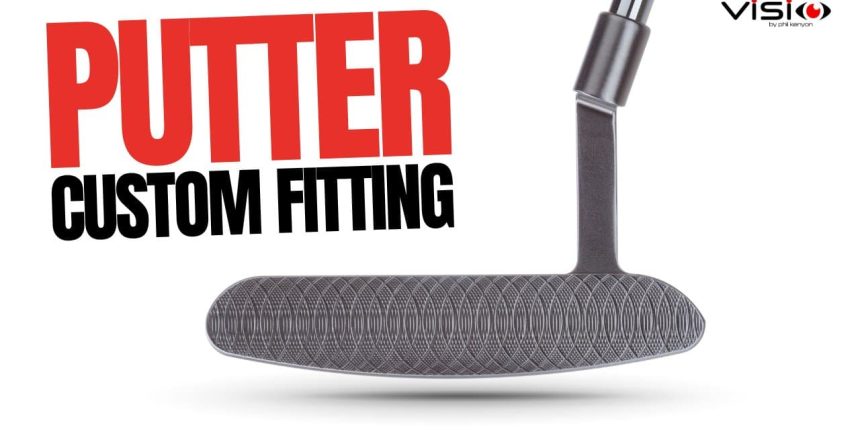
When it comes to golf equipment, most players understand the value of being custom-fitted for drivers, fairway woods, irons, and wedges. However, the putter, a club responsible for nearly half the strokes in a typical round, often goes overlooked in the custom-fitting process.
Factors such as head style, length, lie angle, and face loft can have a profound impact on your putting performance, yet many golfers fail to consider them.
In our coaching and putter-fitting sessions, we frequently meet golfers who underestimate the importance of how the putter interacts with the ball and the green surface. Surprisingly, many are unaware of one key factor: the face loft of their putter—or even that putters have loft at all.
Understanding Putter Loft
Most putters are designed with face loft ranging between 2.5 and 3.5 degrees, depending on the manufacturer. For example, Odyssey putters generally come with a standard 3 degrees of loft. But why does a putter need loft in the first place?
When a golf ball rests on a green, it typically sits slightly below the surface, nestled in a depression created by its own weight. The loft on a putter face is designed to lift the ball out of this depression at impact. Without this loft, the ball could be pushed further into the grass, resulting in unpredictable spin and poor roll.
The Impact of Incorrect Loft
Using a putter with too much or too little loft can negatively affect your ball roll. Here’s how:
• Excessive Loft: If the loft at impact is too high, it can cause the ball to launch into the air with backspin. This compromises your ability to control speed, leading to inconsistent distance control.
• Insufficient Loft: On the other hand, too little loft can compress the ball into the ground causing it to bounce or deflect which coming out of its depression. This also affects consistency in speed and direction.
What Are Ideal Launch Conditions?
The goal of a well-fitted putter is to create optimal launch conditions, ensuring the ball rolls forward as soon as possible after impact with the putter face. The right amount of loft allows the ball to:
1. Lift Out of Its Depression: The ball needs enough loft to escape its resting position without excessive upward launch.
2. Maintain Contact with the Green: The ball should stay in contact with the putting surface, promoting a forward spin axis.
3. Achieve Consistent Roll: A forward spin leads to predictable starting direction, consistent speed, and reliable distance control.
Why You Should Get Custom-Fitted
If you’ve never been custom-fitted for a putter, it’s time to consider it. A professional fitting assesses your stroke, impact angle, and alignment to determine the optimal specifications for your putter, including the loft. Whether it’s your current putter or a new one you plan to purchase, a fitting can address factors you might not have realised were affecting your game.
A custom-fitted putter helps you achieve:
• More consistent roll
• Improved distance control
• Better alignment and accuracy
Take Your Putting Game to the Next Level
Getting custom-fitted for your putter could be the key to unlocking a more confident and effective putting game. By understanding the role of putter loft and optimising your equipment to suit your stroke, you’ll experience improved consistency on the greens and lower scores overall.
Don’t underestimate the power of a properly fitted putter. It’s an investment in your game that pays off with every stroke. Ready to improve your putting? Get custom-fitted and see the difference for yourself.
#practicewithpurpose
Team Visio