Choosing the Right Putter: Mallet vs. Blade
One of the most common questions golfers ask themselves when considering a new putter is, ‘Which style of putter do I need?’. Choosing the right putter is crucial for improving performance on the greens and lowering your scores.
Among the many options available, mallet and blade putters stand out as the two primary styles, each offering unique features and benefits. Here’s a closer look at both to help you make an informed decision.
Mallet Putters: Enhanced Alignment and Forgiveness
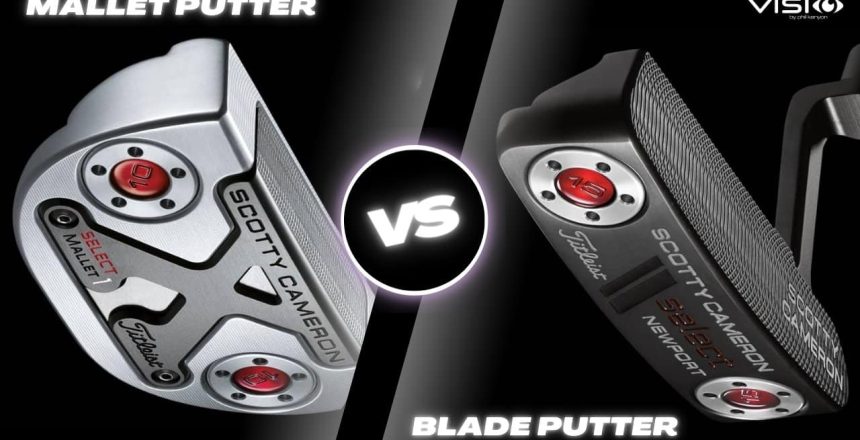
Mallet putters are known for their larger, often rounded or square-shaped heads. Their design frequently includes alignment aids, such as lines or dots, which help golfers line up putts more accurately and consistently. This focus on alignment can boost a golfer’s confidence and improve their putting precision.
One of the key advantages of mallet putters is their forgiveness. With weight distributed around the perimeter of the putter head, mallet putters feature a high moment of inertia (MOI). MOI refers to the clubhead’s resistance to twisting during off-centre strikes which can help distance control.
Additionally, mallet putters often have a centre of gravity located further back in the head so away from the putters face, enhancing the feel of stability during the stroke.
Blade Putters: Classic Design and Responsive Feel
Blade putters represent the more traditional side of putter design. Their compact, narrow heads offer a clean and minimalist look at address, which appeals to golfers who prefer simplicity. While blade putters often lack the prominent alignment aids found in mallet designs, many golfers find their aesthetics inspiring and confidence boosting in their own way.
The standout feature of blade putters is their responsive feel. The placement of the centre of gravity closer to the putter face allows golfers to experience direct feedback from their stroke. The forward CG location can also help direction control for off centre hits contrary to many peoples belief.
Blade putters tend to generally come in a variety of toe hang options, ranging from face-balanced designs to those with significant toe hang. This versatility allows golfers to select a blade putter that suits their stroke mechanics.
Toe hang typically produces more torque in stroke which can often help golfers improve their awareness of where the club is in time and space. On the other hand for some golfers this torque can make it harder to control.
Which Putter is Right for You?
Choosing between a mallet and a blade putter ultimately comes down to personal preference and your specific needs as a golfer. Factors like aesthetics, feel, sound, and your natural putting stroke all play a role in finding the right fit.
Mallet putters are ideal for golfers seeking enhanced alignment and in stroke stability and who might struggle with poor speed control. Meanwhile, blade putters cater to those who appreciate a classic design and value responsiveness in their stroke.
For the best results, consider a professional putter fitting. A fitter can guide you through the process, allowing you to test various styles, alignment aids, weight distributions, and toe hang options. Taking the time to experiment ensures you find a putter that complements your stroke and inspires confidence.
Final Thoughts
The right putter will compliment your stroke, helping you sink more putts and shave strokes off your scorecard. Whether you opt for a forgiving mallet with advanced alignment aids or a classic blade with a responsive feel, the key is finding the putter that feels right for you.
By investing time in the decision and exploring your options, you’ll be well on your way to improved performance on the greens and greater success in your game.
#practicewithpurpose
Team Visio